“It was a rimy morning, and very damp. I had seen the damp lying on the outside of my little window, as if some goblin had been crying there all night, and using the window as a pocket handkerchief. Now, I saw the damp lying on the bare hedges and spare grass, like a coarser sort of spider's webs; hanging itself from twig to twig and blade to blade. On every rail and gate, wet lay clammy; and the marsh-mist was so thick, that the wooden finger on the post directing people to our village — a direction which they never accepted, for they never came there — was invisible to me until I was quite close under it. Then, as I looked up at it, while it dripped, it seemed to my oppressed conscience like a phantom devoting me to the Hulks.”
This passage is near the beginning of Great Expectations. Isn’t it fabulous! I don’t normally think of Dickens as a landscape artist but this novel is full of vivid descriptions of both the outer and the inner world. Here’s another one much later in the novel:
“We got ashore among some slippery stones while we ate and drank what we had with us, and looked about. It was like my own marsh country, flat and monotonous, and with a dim horizon; while the winding river turned and turned, and the great floating buoys upon it turned and turned, and everything else seemed stranded and still. For, now, the last of the fleet of ships was round the last low point we had headed; and the last green barge, straw-laden, with a brown sail, had followed; and some ballast-lighters, shaped like a child's first rude imitation of a boat, lay low in the mud; and a little squat shoal-lighthouse on open piles, stood crippled in the mud on stilts and crutches; and slimy stakes stuck out of the mud, and slimy stones stuck out of the mud, and red landmarks and tidemarks stuck out of the mud, and an old landing-stage and an old roofless building slipped into the mud, and all about us was stagnation and mud.” It’s J.M.W Turner in print isn’t it. Turner died about ten years prior to the publication of Great Expectations – but you can see that both men had been in the same terrain.
I first read this novel in 1963 when I was fourteen. It’s fair to say that I did not like it. At all. So it was with unexpected pleasure that I came to read it again many years later. I think the reason I found it going when I was 14 was because of the main character, the first person narrator, Pip. In an era that predates Freud and Jung, Pip really seems, for much of the novel, to embody our shadow side (and given the physical shadows and mists on the marshes, this seems appropriate). All our shame and guilt is writ large in his behaviour and feelings about himself. Written by an older man as a reflection of his younger self, it is unsparing and merciless. I think I found Pip’s false ideas, his desire for social mobility, his churlish treatment of Joe Gargery, and his hopeless unrequited love for Estella almost unbearable. It’s very hard for the main character to bear this kind of burden; he behaves very badly for at least half the novel. G K Chesterton, who wrote a lot about Dickens, described this novel as “A novel without a hero … it is a novel which aims chiefly at showing that the hero is unheroic.” He also said: “It is a study in human weakness and the slow human surrender.”
A lot of it is about shame. Here’s Pip reflecting on this: “It is a most miserable thing to be ashamed of home. There may be black ingratitude on the thing, and the punishment may be retributive and well deserved; but, that it is a miserable thing, I can testify.”
It’s also about unrequited love. Here’s a lovely, evocative piece: “I said to Biddy that we would walk a little further and we did so, and the summer afternoon toned down into the summer evening, and it was very beautiful. I began to consider whether I was not more naturally and wholesomely situated, after all, in these circumstances, than playing beggar my neighbor by candlelight in the room with the stopped clocks, and being despised by Estella. I thought it would be very good for me if I could get her out of my head, with all the rest of those remembrances and fancies, and could go to work determined to relish what I had to do, and stick to it and make the best if it.
I asked myself the question whether I did not surely know that if Estella were beside me at that moment instead of Biddy, she would make me miserable? I was obliged to admit that I did know it for a certainty, and I said to myself "Pip, what a fool you are!" As Pip says at one stage - "so throughout life, our worst weaknesses and meannesses are usually committed for the sake of people that we most despise." I think my teenage self knew this to be true but wanted to run a mile from its grim view of human behaviour.
As with all Dickens, there is a thousand small phrases that add colour and vigour to the writing. “I sat silent, recalling what a drudge she had been until Mr Wopsle's great aunt successfully overcame that bad habit of living.” You have to love this. Dickens described this novel as atragi-comedy and it’s easy to let the dark side dominate but there are many great comic touches: the unctuous and ingratiating Pumblechook, Mr Wemmick with his postbox of a mouth and his castle and drawbridge and the Aged P, and the slipperiness of Trabb’s boy.
Chesterton again: “Great Expectations, which was written in the afternoon of Dickens's life and fame, has a quality of serene irony and even sadness, which puts it quite alone among his other works. At no time could Dickens possibly be called cynical, he had too much vitality; but relatively to the other books this book is cynical; but it has the soft and gentle cynicism of old age, not the hard cynicism of youth.”
The most recent edition of the novel that I’ve seen has an image of convict leg-irons on the cover. In some ways I think that is the most apt metaphor for the whole novel. Most of the characters are imprisoned by something or someone. All the women are literally almost house-bound (Ms Havisham through madness, Mrs Joe after her accident, Estella growing up in a lonely house captive to a delusional woman), Pip sees his life as circumscribed by his social class and education, until his fate changes, Jaggers is a lonely workaholic who sees emotions as having the potential to derail him.
The great joy in the novel is as Pip finds his moral centre and begins to appreciate the qualities that we see in Herbert Pocket, in Joe, in Magwich and in Wemmick. It’s ultimately a story of redemption; that it is possible to live differently; to live a good and kind life. I think it’s a great book.
Showing posts with label yearning. Show all posts
Showing posts with label yearning. Show all posts
Friday, June 22, 2012


Monday, January 2, 2012
Horror of adolescence

Little Star – a horror story or a deeper book about adolescence? Or both those things. I first accessed the novelist Lindqvist’s work with the film Let the Right One in - also a horror narrative which is also about adolescence.
In Little Star, Lindqvist traces the lives of two girls – both outsiders in Swedish society. Theres, abandoned as a baby, is a very fine singer with some developmental issues. Theresa is an overweight, lonely, bullied child. The novel explores what they do with their feelings of alienation and to say more about the plot would be wrong. I think the writer is extremely good at getting inside the head of these disaffected girls. He says that he thinks that the main flaw in many horror films is that he can’t identify with the main characters. Lindqvist ensures that we empathise with the character of Theresa, and to a lesser extent Theres, at the same time as being disturbed and alienated by what they do. He said that he tries “to combine both those things, that the child is the protagonist, the one we are following, the one that drives the tale forward, and at the same time being the one that you have to watch out for.”
What he delivers is not new or unique but it is interesting. This novel doesn’t work as well for me as the film of 'Let the Right One in' did, but it was a great thing to read in the bright light of a summer Christmas at the beach. A few brooding teenagers around at Waratah Bay but none with obvious homicidal urges.
It’s worth reading a little of what the writer had to say about his work in an interview on the Constructing Horror website:
“But then I think that many horror films and horror storytellers dig deep into the hole that is their own childhood to reach a more original fear. A fear that is nameless. As an adult we can rationalize out thoughts. This is that, and that scares me where that doesn’t. But as a child the stuff out there in the dark or that strange noise under the bed could be anything. If I want to conjure up something that is really scary, an image of something really horrible, then I almost always have to go back to my early years to find a description of that fear. And I think these are emotions and fears that many who write, or work with horror use in their work.”
Interestingly, what I think he really nails are the real and practical fears of childhood and adolescence (regardless of those that linger under the bed) – the question of fitting in, of friendships and of connection – or lack of it. This is the real horror of that period of life.
all my reviews
Bad girl, good boy?

Patti Smith begins Just Kids with a formal old-fashioned kind of language. The voice unsettles – it’s not what I expected. Soon after she departs Chicago for New York, that voice disappears and what replaces it is a frank and honest contemporary feel. Her story is beguiling – she leaves badly paid factory work and the shame of having a child out of wedlock in search of something more akin with who she is – a potential artist of some kind. Her mother – who thinks she will probably end up waitressing, gives her a pristine new waitress uniform and a pair of white waitress shoes which Smith abandons after a couple of hours of this kind of work. She’s not a snob about what she does though – the book has a humble tone.
Smith arrives in New York and almost immediately meets Robert Mapplethorpe. They connect as fellow ingénues and wanna-be artists. Actually Mapplethorpe is probably not an ingénue – but she initially presents him as a gentle beautiful artistic boy. She says: "We used to laugh at our small selves, saying that I was a bad girl ¬trying to be good and that he was a good boy trying to be bad."
They arrive in New York at a very dynamic time – 1967 (is there not a dynamic time in this city?) and gradually began to move in the same circles as a whole lot of artists and musicians. For the first half of the book, there is no mention of her being a practising musician though she certainly loves music and references artists like Dylan. Staying at the Chelsea Hotel for a while, she mentions contact with Jimi Hendrix, Grace Slick and Janis Joplin and wrote poems/ songs for some of these people. Much of the book is devoted to exploring the relationship that she has with Mapplethorpe - their struggle to make art, the fun they had, and the beginning of a clash in values as Mapplethorpe begins to work his way through the social set in New York.
The writing describing their activities is lovely – aesthetes who value the visual, who try to add beauty to the spartan rooms they inhabit, who express part of their identity through what they choose to wear. The image of the book released in the America is worth looking at (It's the one shown here) – Mapplethorpe and Smith dressed up for an excursion to Coney Island. Also worth looking up the very beautiful image that Mapplethorpe took of Smith for her first album, Horses - speaks for the essence of the book and their relationship - and the times.
One reviewer describes the book at embodying the spirit of Smith’s song Elegie written for Jimi Hendrix and that it was written “in a strong, true voice unencumbered by the polarizing mannerisms of her poetry.” True. I thoroughly enjoyed my time with her. And him.
View all my reviews
Sunday, February 22, 2009
Ego integrity and despair
I like listening to Radiotherapy on RRR on Sunday mornings. It’s a bunch of doctors chewing over medical stuff and sometimes they do film reviews. I don’t know if it’s the same reviewer every time but he often comes at things from a psychoanalytic POV – often quite a different take on films. Yesterday he reviewed Gran Torino which he and I both liked. He talked about Erik Erikson’s work on the 8 stages of man – the last one is Ego Integrity vs. Despair - old age. “Some handle death well. Some can be bitter, unhappy, dissatisfied with what they accomplished or failed to accomplish within their life time. They reflect on the past, and conclude at either satisfaction or despair.” (Wikipedia)
This had huge resonance for me because I think this is where my father is at; reflecting on his life and in his case, I think he fluctuates between the two Erikson categories of despair and ego integrity. In the case of Gran Torino, it’s Clint Eastwood who plays an angry, lonely old bastard, a man who has just lost his wife and who has the slightest of relationships with his family. I’m not going to write at length about the film; I liked it despite the fact that most of the plot is a basic redemption plot - dysfunctional person is led to a better, happier life almost in spite of himself. It is also about the Hmong community in the USA, a community I know a little about because of the book The Spirit Catches You and You Fall Down. While Gran Torino is not a great film, the baddies (Hmong gangsters) look like total baddies and it is largely though not entirely predictable, it was oddly satisfying seeing this old curmudgeon gradually accept friendship even though he never lost the surface elements of racism. I really enjoyed it. We love seeing bad guys get what they deserve. And Eastwood obviously had a lot of fun with the non-PC aspects of the character he plays - there are some very funny moments. He is great – and brave – he looks his age. Which is old.
I thought of the film gain yesterday after watching The Wrestler which I thought was great. Mickey Rourke was playing a man at the end of his wrestling career, held together by steroids, bandages and headlines from the glory years of his character, “Randy the Ram”. His life is crap: trailer park trash, he’s lonely, broke and damaged. Like Eastwood, he has fucked up relations with the only family he has, his daughter. It’s a stretch applying the Erikson stage to it because Rourke’s character is, I think, meant to be in his fifties but steroid abuse and the damages perpetuated by wrestling have really aged him and one of the events in the film causes him to want to change his life. Rourke is really fabulous. It’s painful watching him try to connect with the lap-dancer character played by Marissa Tomei. He is embarrassingly gauche and shambling with the Tomei character Cassie/Pam, as he also is with his daughter. The Cassie/Pam character has a twofold purpose in the film; she represents new possibilities for Randy and her own life parallels his – they are both struggling with jobs that require a specific and damaging kind of performance that is at odds with the “real” or regular lives that other people live. Both have a performance persona, they frock up (or down in Tomei’s case), they play for the punters and suffer humiliations as a result. (One of the best scenes in the film shows the small cohort of deadbeat wrestlers seated at card tables in a community hall, selling videos (not DVDs) of past glories and signing autographs for the meagre numbers of fans that trawl through this bleak and wintery town)
I can’t do justice to the treatment of wrestling in the film. It is remarkable. The wrestling scenes are violent and theatrical and there were segments in the film which were hard to sit through even though I watched knowing that it was all about performance. Like lap-dancing. The film avoids predictability; I thought it was great. In an interview conducted by James Rocchi, director Aronofsky credited a 1957 Charles Mingus song "The Clown," an instrumental piece with a poem read over the music about a clown who accidentally discovers the bloodlust of the crowds and eventually kills himself in performance, as a major source of inspiration for the movie.
This had huge resonance for me because I think this is where my father is at; reflecting on his life and in his case, I think he fluctuates between the two Erikson categories of despair and ego integrity. In the case of Gran Torino, it’s Clint Eastwood who plays an angry, lonely old bastard, a man who has just lost his wife and who has the slightest of relationships with his family. I’m not going to write at length about the film; I liked it despite the fact that most of the plot is a basic redemption plot - dysfunctional person is led to a better, happier life almost in spite of himself. It is also about the Hmong community in the USA, a community I know a little about because of the book The Spirit Catches You and You Fall Down. While Gran Torino is not a great film, the baddies (Hmong gangsters) look like total baddies and it is largely though not entirely predictable, it was oddly satisfying seeing this old curmudgeon gradually accept friendship even though he never lost the surface elements of racism. I really enjoyed it. We love seeing bad guys get what they deserve. And Eastwood obviously had a lot of fun with the non-PC aspects of the character he plays - there are some very funny moments. He is great – and brave – he looks his age. Which is old.
I thought of the film gain yesterday after watching The Wrestler which I thought was great. Mickey Rourke was playing a man at the end of his wrestling career, held together by steroids, bandages and headlines from the glory years of his character, “Randy the Ram”. His life is crap: trailer park trash, he’s lonely, broke and damaged. Like Eastwood, he has fucked up relations with the only family he has, his daughter. It’s a stretch applying the Erikson stage to it because Rourke’s character is, I think, meant to be in his fifties but steroid abuse and the damages perpetuated by wrestling have really aged him and one of the events in the film causes him to want to change his life. Rourke is really fabulous. It’s painful watching him try to connect with the lap-dancer character played by Marissa Tomei. He is embarrassingly gauche and shambling with the Tomei character Cassie/Pam, as he also is with his daughter. The Cassie/Pam character has a twofold purpose in the film; she represents new possibilities for Randy and her own life parallels his – they are both struggling with jobs that require a specific and damaging kind of performance that is at odds with the “real” or regular lives that other people live. Both have a performance persona, they frock up (or down in Tomei’s case), they play for the punters and suffer humiliations as a result. (One of the best scenes in the film shows the small cohort of deadbeat wrestlers seated at card tables in a community hall, selling videos (not DVDs) of past glories and signing autographs for the meagre numbers of fans that trawl through this bleak and wintery town)
I can’t do justice to the treatment of wrestling in the film. It is remarkable. The wrestling scenes are violent and theatrical and there were segments in the film which were hard to sit through even though I watched knowing that it was all about performance. Like lap-dancing. The film avoids predictability; I thought it was great. In an interview conducted by James Rocchi, director Aronofsky credited a 1957 Charles Mingus song "The Clown," an instrumental piece with a poem read over the music about a clown who accidentally discovers the bloodlust of the crowds and eventually kills himself in performance, as a major source of inspiration for the movie.
Sunday, February 1, 2009
Life is short and then you die
The length of a film is not the best grounds for choosing which one to watch but the over 40’s Melbourne temperatures of last week made the decision easy. Find the longest film on offer at the closest cinema. And so I went to see The Curious Case of Benjamin Button. I liked it more than I expected even though I have an automatic resistance to these kinds of films. By this I mean extremely polished, expensive, emotionally manipulative films from the Hollywood stable. I don’t like crying over crap or having sentiment front and centre as a device. I don’t much like Brad Pitt as an actor either. Less pretty is good. And this film is all about pretty – in lots of ways. (And on the Brad topic, I loved this critique of him from film critic A O Scott in the New York Times; “Mr. Pitt seems more interested in the nuances of reticence than in the dynamics of expression”. Originally John Travolta was to have had the role; he would have been a better choice.)
So, what‘s to like? Almost every scene looks like a scene from a picture-story book, with the exception of the “modern” scenes which contrast nicely. The historical scenes are filmed in a luminous sort of candlelight which makes then look both rich and mysterious. I’m sure that part of the reason for this would have been the need to cleverly manage the process of ageing Brad backwards; he is born in the guise of a very old man and becomes younger as the film develops. So soft lighting is important; as the Brad character, Benjamin becomes younger, his co-star, Cate Blanchett, playing Daisy, has to age. The scenes are visually striking; lush and dramatic. It's a lovely film to look at.
The picture story book effect provides the film with licence to be melodramatic. A baby is close to being thrown in the river by his father, a tugboat is blown to bits at war, a woman is knocked down by a car, Hurricane Katrina is whirling round the edges of the modern story. It’s a fable. And provided you accept that it’s a fable, it’s quite satisfying.
A lot of critics have rightly criticised the lack of characterisation in the film. Usually this matters to me but I think this is a film about a larger topic; the passage of time and how humans manage it. It’s about the brief ephemeral intersections of contact and about loss. Loss caused by death and loss caused when people move on or move out of your life.
The most poignant scene for me was late in the film. Benjamin and Daisy intersect many times as she ages and he goes in the opposite direction. After a gap of several years, Benjamin walks through the door of her dance studio and stands, looking at her. She doesn’t initially recognise him. Her face is lined, she is a middle-aged woman. He is a young man, glowing with all the gorgeousness of youth. My mind went immediately to my recent meeting with Geoff, a man I lived with a long time ago. We hadn’t seen each other for many years and so meeting again, were confronted by physical change, by memories of the relationship we had shared and by what was left - nothing really. I felt a sense of loss – not that we no longer had a relationship but that there was nothing left now. No yearning, no nothing. I had the “So what’s it all for?” feeling. It made me feel terribly, terribly sad.
The focus on aging also made me think about my father and his own aging process, the pain of it. It’s painful watching my father go through this. Painful, sad and frustrating. The world becomes smaller and more circumscribed. But not necessarily. Geoff is not in my current life and making that decision decades ago was a good decision. What I have now is rich, lively and full of opportunities. Some options have closed down but I don’t feel like my world is getting smaller; if anything it seems more open-ended and full of promise.
The film comes from a short story written by F Scott Fitzgerald, who had an ongoing preoccupation with the ephemerality of things. I haven’t read it yet but you can download it. The screenplay was written by Eric Roth, who also wrote Forrest Gump. I was pleased when I read this – not because I liked Forrest Gump much but I was reminded of that film while I was watching the Benjamin Button film and I couldn’t work out why – something to do with the over-orchestration of effects and emotions, I think. It’s made me want to go and re-read Scott Fitzgerald which is no bad thing…
So, what‘s to like? Almost every scene looks like a scene from a picture-story book, with the exception of the “modern” scenes which contrast nicely. The historical scenes are filmed in a luminous sort of candlelight which makes then look both rich and mysterious. I’m sure that part of the reason for this would have been the need to cleverly manage the process of ageing Brad backwards; he is born in the guise of a very old man and becomes younger as the film develops. So soft lighting is important; as the Brad character, Benjamin becomes younger, his co-star, Cate Blanchett, playing Daisy, has to age. The scenes are visually striking; lush and dramatic. It's a lovely film to look at.
The picture story book effect provides the film with licence to be melodramatic. A baby is close to being thrown in the river by his father, a tugboat is blown to bits at war, a woman is knocked down by a car, Hurricane Katrina is whirling round the edges of the modern story. It’s a fable. And provided you accept that it’s a fable, it’s quite satisfying.
A lot of critics have rightly criticised the lack of characterisation in the film. Usually this matters to me but I think this is a film about a larger topic; the passage of time and how humans manage it. It’s about the brief ephemeral intersections of contact and about loss. Loss caused by death and loss caused when people move on or move out of your life.
The most poignant scene for me was late in the film. Benjamin and Daisy intersect many times as she ages and he goes in the opposite direction. After a gap of several years, Benjamin walks through the door of her dance studio and stands, looking at her. She doesn’t initially recognise him. Her face is lined, she is a middle-aged woman. He is a young man, glowing with all the gorgeousness of youth. My mind went immediately to my recent meeting with Geoff, a man I lived with a long time ago. We hadn’t seen each other for many years and so meeting again, were confronted by physical change, by memories of the relationship we had shared and by what was left - nothing really. I felt a sense of loss – not that we no longer had a relationship but that there was nothing left now. No yearning, no nothing. I had the “So what’s it all for?” feeling. It made me feel terribly, terribly sad.
The focus on aging also made me think about my father and his own aging process, the pain of it. It’s painful watching my father go through this. Painful, sad and frustrating. The world becomes smaller and more circumscribed. But not necessarily. Geoff is not in my current life and making that decision decades ago was a good decision. What I have now is rich, lively and full of opportunities. Some options have closed down but I don’t feel like my world is getting smaller; if anything it seems more open-ended and full of promise.
The film comes from a short story written by F Scott Fitzgerald, who had an ongoing preoccupation with the ephemerality of things. I haven’t read it yet but you can download it. The screenplay was written by Eric Roth, who also wrote Forrest Gump. I was pleased when I read this – not because I liked Forrest Gump much but I was reminded of that film while I was watching the Benjamin Button film and I couldn’t work out why – something to do with the over-orchestration of effects and emotions, I think. It’s made me want to go and re-read Scott Fitzgerald which is no bad thing…
Thursday, December 18, 2008
Rabbit again
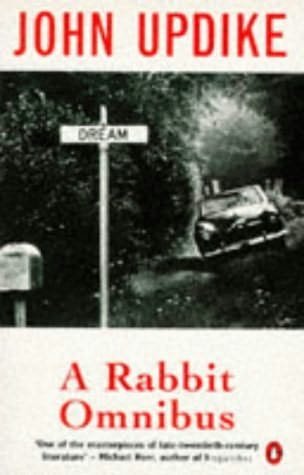
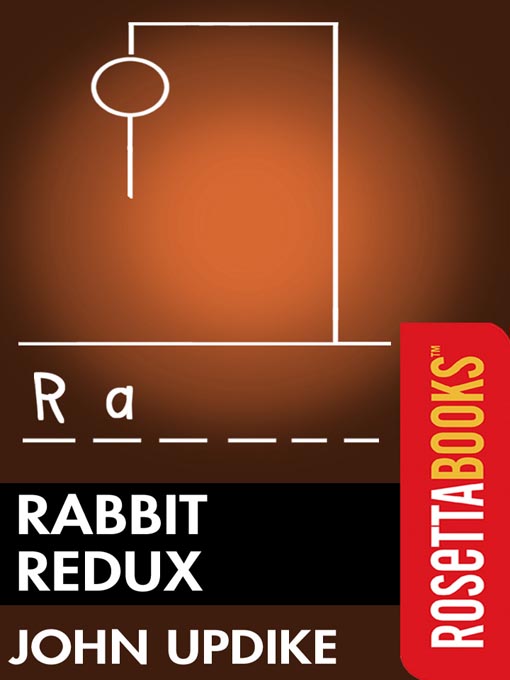
I don’t remember reading Rabbit Redux when I was young and there is no copy at home. My 2008 copy has an image of a hand holding a chipped mug of coffee on the cover. The fingers are stained with printer’s ink but they look too small to be the hands of a former successful basketballer, as Harry was. Maybe they are the hands of his father who is a small but important character in the book. The image is kind of at odds with the drama of the book; the comforting domesticity of this working class image gives nothing away in terms of a story about the massive changes happening in American socitey, the shifts in the tectonic plates embodied in Harry's drift into experiments with drugs, new sexual partners and black consciousness. All this in Penn Villas, a new housing development on the edge of Brewer, Pennsylvania. (For some alternative covers, go here, here and here. I particularly like the Hangman cover.)
I stopped half way through the novel for a while. Harry spends much of the middle part of the story in a kind of loose vacuum. Like the first novel he is strikingly without agency; he floats into things without making real conscious decisions. Or if he is decisive, it’s quite short–term; should he have sex with Peggy Fosnacht that night? Actually it's not even that far ahead - it's more like should he have sex with Peggy Fosnacht, she has just unzipped her dress? Anatole Broyard, writing in 1971 when the novel was published says:


I stopped half way through the novel for a while. Harry spends much of the middle part of the story in a kind of loose vacuum. Like the first novel he is strikingly without agency; he floats into things without making real conscious decisions. Or if he is decisive, it’s quite short–term; should he have sex with Peggy Fosnacht that night? Actually it's not even that far ahead - it's more like should he have sex with Peggy Fosnacht, she has just unzipped her dress? Anatole Broyard, writing in 1971 when the novel was published says:
“He went back to Rabbit because he knew that it was too easy to have an intellectual or an artist as a hero. There is always a temptation to talk or think things out -- but with a guy like Rabbit, you have to act them out all the way, show what's happening to him, nakedly, without off-stage intellection or interpretation. The thought must be made flesh; the flesh, as in sex, made metaphor; the man in the street tormented into irony. Where Rabbit once ran away, he's now standing his ground, letting the world flow over and around him while he tries to keep his head above water.”
This is a fabulous description of what Updike is about in working with Rabbit.
I think, for a while, I found the drifting hard to read about. And I got sick of the black guy Skeeter. I think Updike wanted this effect but maybe he doesn’t want people to stop reading. I decided to have a break from reading Rabbit then really enjoyed it when I went back to it. Broyard reckons that Harry is climbing out on a limb (any limb, every limb) and swinging – trying to find something in the shifting morass that America is in. and trying to find traction for his own 36 year old self, fast wilting into middle age.
The three defining descriptors of American life in this book are the Vietnam War, the rise of black consciousness and the successful Apollo mission. (Interesting comparison the Space War and the Vietnam War)Other aspects also prevail like the ways in which middle class kids went searching for something different than their parent’s lives. Broyard has a nice way of describing this aspect of the book – Harry hooks up with a barely adult girl for a while: “In Jill, Updike explores the incompleteness -- in them and in ourselves -- that, like a vacuum, draws us toward very young girls.” Aaarrgh so scarily accurate, I think, about men.
I want to include a paragraph about sex so will edit this entry later; he writes so well about this business. What he also does well is the domestic; the fraught ties between Harry and his parents, the guilt and love, the depiction of both his parents is really exquisite. Then at the end, Stage Left: Mim, the sister, living the life not lived. Vivid, in-your-face Updike…
Sunday, October 26, 2008
Forget after watching?
I went to see the latest Coen brothers film, Burn After Reading, with my 16 year old niece. I find it impossible to resist the Coens even after No Country for Old Men which I hated. And had I written this review that Friday night immediately after watching the film, my comments would be a little different.
The film sets up 2 inept employees of a gymnasium, who seek to blackmail an ex-CIA man, John Malkovich, who is having marital problems. It is a kind of black comedy farce with Brad Pitt playing, with a lot of skill, one of the hopeless blackmailers and Frances McDormand, the other. Pitt is really funny; I liked him far more in this film than in anything else I’ve seen him in. And on the surface, that is what it is; a comedy filled with mostly unlikeable characters with the regular sprinkling of surprising violence. The Coens always do good dialogue, like Tarantino, and there are scenes in the film which are very funny.
George Clooney features as a philandering diversion and creator of the most bizarre sex aid I’ve seen in any movie (porn included – in fact it’s the 15 year old boy part of the Coen brothers on display here. They obviously couldn’t help themselves). The Coens said that idiocy was a major central theme of Burn After Reading; Joel Coen said he and his brother have "a long history of writing parts for idiotic characters" and described Clooney and Pitt's characters as "dueling idiots". Pitt said of his role, "After reading the part, which they said was hand-written for myself, I was not sure if I should be flattered or insulted". He also said when he was shown the script, he told the Coens he did not know how to play the part because the character was such an idiot: "There was a pause and then Joel goes...'You'll be fine.'"
Tilda Swinton, who plays the wife of the Malkovich character, described Burn After Reading as a kind of monster caper movie, and said of the characters, "All of us are monsters – like, true monsters. It’s ridiculous." She also said, "I think there is something random at the heart of this one. On the one hand, it really is bleak and scary. On the other, it is really funny. ... It's the whatever-ness of it. You feel that at any minute of any day in any town, this could happen."
I laughed a bit but found the violence abrupt and unexpected. It also took out the only characters with any pretensions to likeability in the film. But I was entertained. And also entertained by the idea of calling the review ‘Forget after watching…”
And then I heard Julie Rigg and others talking about the film on “Australia Talks Movies”. Several callers made points that I wish I’d thought of. “John from Brisbane” provided the most interesting perspective of the conversation. He said that he felt it was a Coen Brother classic, that it was a very serious film. The central character, McDormand, has superficial obsessions about her appearance which ultimately have really horrible consequences for the characters around her. He said that he felt that the film is warning us about what society is coming to, that our feelings of emptiness or uneasiness at the end of the film are because of the self-centredness of the characters, the moral emptiness of their decisions and the fact that no one can find love in the film. We are reminded of this on several occasions in the film as the camera returns to the location in a park where people wait to meet their Internet dates, strung out on park benches as other people wander along wondering if that man on that bench will be the person of their dreams.
"John from Brisbane" went on to talk about how the CIA is positioned; an organisation usually associated with menace seems out of its depth, on the back foot. Ruth Hessey, another contributor to the Radio National program, spoke about the film reflecting “the paranoia of the modern world” that may mean it ages well. In fact, we live in a society where people are more and more accessible - the film opens with a great zooming shot as Google Earth pans down from on high into CIA headquarters, but increasingly people are less and less connected and more fragmented. It suggests that we have lost touch with what is important but hang on desperately to the magic wand of things like cosmetic surgery to change our lives and bring us joy.
I began to see the film differently - the Radio National comments have made it less forgettable and I am grateful for this.
The film sets up 2 inept employees of a gymnasium, who seek to blackmail an ex-CIA man, John Malkovich, who is having marital problems. It is a kind of black comedy farce with Brad Pitt playing, with a lot of skill, one of the hopeless blackmailers and Frances McDormand, the other. Pitt is really funny; I liked him far more in this film than in anything else I’ve seen him in. And on the surface, that is what it is; a comedy filled with mostly unlikeable characters with the regular sprinkling of surprising violence. The Coens always do good dialogue, like Tarantino, and there are scenes in the film which are very funny.
George Clooney features as a philandering diversion and creator of the most bizarre sex aid I’ve seen in any movie (porn included – in fact it’s the 15 year old boy part of the Coen brothers on display here. They obviously couldn’t help themselves). The Coens said that idiocy was a major central theme of Burn After Reading; Joel Coen said he and his brother have "a long history of writing parts for idiotic characters" and described Clooney and Pitt's characters as "dueling idiots". Pitt said of his role, "After reading the part, which they said was hand-written for myself, I was not sure if I should be flattered or insulted". He also said when he was shown the script, he told the Coens he did not know how to play the part because the character was such an idiot: "There was a pause and then Joel goes...'You'll be fine.'"
Tilda Swinton, who plays the wife of the Malkovich character, described Burn After Reading as a kind of monster caper movie, and said of the characters, "All of us are monsters – like, true monsters. It’s ridiculous." She also said, "I think there is something random at the heart of this one. On the one hand, it really is bleak and scary. On the other, it is really funny. ... It's the whatever-ness of it. You feel that at any minute of any day in any town, this could happen."
I laughed a bit but found the violence abrupt and unexpected. It also took out the only characters with any pretensions to likeability in the film. But I was entertained. And also entertained by the idea of calling the review ‘Forget after watching…”
And then I heard Julie Rigg and others talking about the film on “Australia Talks Movies”. Several callers made points that I wish I’d thought of. “John from Brisbane” provided the most interesting perspective of the conversation. He said that he felt it was a Coen Brother classic, that it was a very serious film. The central character, McDormand, has superficial obsessions about her appearance which ultimately have really horrible consequences for the characters around her. He said that he felt that the film is warning us about what society is coming to, that our feelings of emptiness or uneasiness at the end of the film are because of the self-centredness of the characters, the moral emptiness of their decisions and the fact that no one can find love in the film. We are reminded of this on several occasions in the film as the camera returns to the location in a park where people wait to meet their Internet dates, strung out on park benches as other people wander along wondering if that man on that bench will be the person of their dreams.
"John from Brisbane" went on to talk about how the CIA is positioned; an organisation usually associated with menace seems out of its depth, on the back foot. Ruth Hessey, another contributor to the Radio National program, spoke about the film reflecting “the paranoia of the modern world” that may mean it ages well. In fact, we live in a society where people are more and more accessible - the film opens with a great zooming shot as Google Earth pans down from on high into CIA headquarters, but increasingly people are less and less connected and more fragmented. It suggests that we have lost touch with what is important but hang on desperately to the magic wand of things like cosmetic surgery to change our lives and bring us joy.
I began to see the film differently - the Radio National comments have made it less forgettable and I am grateful for this.
Wednesday, October 22, 2008
Rabbit, Run
What comes to mind when you think about the characteristics of a rabbit? For me the quality of timidity is uppermost so when John Updike talks about using the rabbit as a metaphor for his young protagonist in Rabbit Run, it’s not quite what I expected.
Rabbit, AKA Harry Angstrom, is 26. He feels like his life has already peaked. As Updike puts it; “You get the feeling you’re in your coffin before they’ve taken your blood out.” At school Rabbit was a basketball star but now he is a has-been, earning a living demonstrating a kitchen appliance, married to a girl who he feels little for and father of a child who figures little in his thinking.
It’s a brave book because the main protagonist is so rarely likable and we develop sympathy for, but no strong liking for most of the rest of the cast of characters. It’s a book written by a young man, about the life of a young man who is filled with impulse and a yearning for something that he can’t even articulate but it’s something like “Life’s gotta be better than this.”
The first part of the novel is a road movie. It feels like a movie, the camera sliding all over the place under a big starry sky and Rabbit ventures further out beyond his comfort zone although it is clear that the “comfort zone” of the town of Brewer is now a discomfit zone for him. I was scared reading it; I so wanted Harry to go home. He was so adrift in the universe and consequently ungrounded and vulnerable. Eventually he returns to Brewer but not to his wife and child. He hooks up with the first woman he meets, Ruth. He is hapless rather than opportunist but frustrating. I waited for him to begin to miss his little boy but 100 pages go by without a moment’s reflection about his son. John Updike said that he wrote Rabbit, Run in response to Jack Kerouac's On the Road, and tried to depict "what happens when a young American family man goes on the road – the people left behind get hurt.”
The novel is also brave, for the time period, in the way it depicts the character Ruth, who, of course, is the character I most responded to. She struggles to identify what is good for her and to stand up for herself; Updike depicts her internal battles really well even though she gets only a limited amount of time in the book. Harry is dangerous and even though she is pregnant, she does not readily let him back into her life. I found myself desperately wanting them to get together but this would be such a bad deal for Ruth. Harry is a very bad bargain. Why did I want this “happy ending”? The following sentence says it all – Ruth has told Harry that she is pregnant to him and that she thinks he would be bad news back in her life and yet there seems to be a slim opening – and all he can think about is food; “He nervously felt her watching him for some sign of resolution inspired by her speech. In fact he has hardly listened; it is too complicated and, compared to the vision of a sandwich, unreal.”
Updike's novel is noted as being one of several well regarded, early usages of the present tense. Updike stated that "in Rabbit, Run, I liked writing in the present tense. You can move between minds, between thoughts and objects and events with a curious ease not available to the past tense. I don't know if it is clear to the reader as it is to the person writing, but there are kinds of poetry, kinds of music you can strike off in the present tense." He also writes “At one point Rabbit is literally lost, and tears up a map he cannot read; but the present tense, to me as I began to write it, felt not so much ominous as exhilaratingly speedy and free – free of the grammatical bonds of the traditional past tense and of the subtly dead, muffling hand it lays on every action. To write “he says” instead of “he said" rebellious and liberating in 1959.”
I very much like Updike’s prose as well as his exploration of the domestic. American society is undergoing a quiet revolution but Rabbit, Run is preoccupied with the struggle with domesticity, with the familiar, the unsexy, the predictable, the honest, the true, the respectable. And maybe that’s what the larger changes in US society are about too but they don’t impinge on this novel except that we can see, from the contrast in generations, from the aging Springers and Angstroms, from Coach Tothero, that the next generation is yearning for something different.
His prose? Here is another example ”He comes onto the porch to find the boy between his grandmother’s legs, his face buried in her belly. In worming against her warmth he has pulled her dress up from her knees and their repulsive breadth and pallor, laid bare defensively, superimposed upon the tiny gamely gritted teeth the boy exposed for him, this old whiteness strained through this fine mesh, make a milk that feels to Eccles like his own blood.” (p136) David Boroff, in a review written in 1960, described it as “a tender and discerning study of the desperate and the hungering in our midst.” Updike is perhaps a little soft on Rabbit but he was young too when he wrote it.
Rabbit, AKA Harry Angstrom, is 26. He feels like his life has already peaked. As Updike puts it; “You get the feeling you’re in your coffin before they’ve taken your blood out.” At school Rabbit was a basketball star but now he is a has-been, earning a living demonstrating a kitchen appliance, married to a girl who he feels little for and father of a child who figures little in his thinking.
It’s a brave book because the main protagonist is so rarely likable and we develop sympathy for, but no strong liking for most of the rest of the cast of characters. It’s a book written by a young man, about the life of a young man who is filled with impulse and a yearning for something that he can’t even articulate but it’s something like “Life’s gotta be better than this.”
The first part of the novel is a road movie. It feels like a movie, the camera sliding all over the place under a big starry sky and Rabbit ventures further out beyond his comfort zone although it is clear that the “comfort zone” of the town of Brewer is now a discomfit zone for him. I was scared reading it; I so wanted Harry to go home. He was so adrift in the universe and consequently ungrounded and vulnerable. Eventually he returns to Brewer but not to his wife and child. He hooks up with the first woman he meets, Ruth. He is hapless rather than opportunist but frustrating. I waited for him to begin to miss his little boy but 100 pages go by without a moment’s reflection about his son. John Updike said that he wrote Rabbit, Run in response to Jack Kerouac's On the Road, and tried to depict "what happens when a young American family man goes on the road – the people left behind get hurt.”
The novel is also brave, for the time period, in the way it depicts the character Ruth, who, of course, is the character I most responded to. She struggles to identify what is good for her and to stand up for herself; Updike depicts her internal battles really well even though she gets only a limited amount of time in the book. Harry is dangerous and even though she is pregnant, she does not readily let him back into her life. I found myself desperately wanting them to get together but this would be such a bad deal for Ruth. Harry is a very bad bargain. Why did I want this “happy ending”? The following sentence says it all – Ruth has told Harry that she is pregnant to him and that she thinks he would be bad news back in her life and yet there seems to be a slim opening – and all he can think about is food; “He nervously felt her watching him for some sign of resolution inspired by her speech. In fact he has hardly listened; it is too complicated and, compared to the vision of a sandwich, unreal.”
Updike's novel is noted as being one of several well regarded, early usages of the present tense. Updike stated that "in Rabbit, Run, I liked writing in the present tense. You can move between minds, between thoughts and objects and events with a curious ease not available to the past tense. I don't know if it is clear to the reader as it is to the person writing, but there are kinds of poetry, kinds of music you can strike off in the present tense." He also writes “At one point Rabbit is literally lost, and tears up a map he cannot read; but the present tense, to me as I began to write it, felt not so much ominous as exhilaratingly speedy and free – free of the grammatical bonds of the traditional past tense and of the subtly dead, muffling hand it lays on every action. To write “he says” instead of “he said" rebellious and liberating in 1959.”
I very much like Updike’s prose as well as his exploration of the domestic. American society is undergoing a quiet revolution but Rabbit, Run is preoccupied with the struggle with domesticity, with the familiar, the unsexy, the predictable, the honest, the true, the respectable. And maybe that’s what the larger changes in US society are about too but they don’t impinge on this novel except that we can see, from the contrast in generations, from the aging Springers and Angstroms, from Coach Tothero, that the next generation is yearning for something different.
His prose? Here is another example ”He comes onto the porch to find the boy between his grandmother’s legs, his face buried in her belly. In worming against her warmth he has pulled her dress up from her knees and their repulsive breadth and pallor, laid bare defensively, superimposed upon the tiny gamely gritted teeth the boy exposed for him, this old whiteness strained through this fine mesh, make a milk that feels to Eccles like his own blood.” (p136) David Boroff, in a review written in 1960, described it as “a tender and discerning study of the desperate and the hungering in our midst.” Updike is perhaps a little soft on Rabbit but he was young too when he wrote it.
I read a lot of the "Rabbit" books in my early 20's and it's a great pleasure coming back to them: I am hungry for the next one.
Subscribe to:
Posts (Atom)